
Article Info
Author Affiliations
a. Department of Pediatric Neurology, KIMSHEALTH, Trivandrum, Kerala, India.
Corresponding Author
Greeshma Baby, Department of Pediatric Neurology, KIMSHEALTH, Trivandrum, Kerala, India.
Email address: greeshmababy1990@gmail.com
Keywords
- pediatric migraine
- migraine triggers
- PedMIDAS
- headache disability
- lifestyle modification
- childhood headache
- migraine prophylaxis
Original Research
Clinical profile, triggers, and disability assessment in pediatric migraine: A tertiary care experience from south India
Greeshma Babya, Kalpana Da, Karthika Ajitha
Scientific Proceedings. 12(3):77-84, September 2025


Abstract
Background
Migraine is a common neurological disorder in children and adolescents and contributes significantly to school absenteeism and reduced quality of life. Pediatric migraine often presents differently from adult migraine and may be influenced by various lifestyle and environmental triggers. This study aimed to evaluate the clinical characteristics, associated triggers, and migraine-related disability in children with migraine.
Methods
This prospective observational study was conducted in the Pediatric Neurology Outpatient Department of a tertiary care center in Kerala over 15 months (May 2023 to August 2024). Children aged 5–15 years diagnosed with migraine according to the International Headache Society (IHS) criteria were included. Patients with a normal systemic and neurological examination, experiencing 2–8 attacks per month, and not on prophylactic therapy for the previous four months were recruited. Clinical characteristics, associated symptoms, and potential triggers were recorded using a migraine diary. Migraine severity was assessed using the Visual Analog Scale (VAS), and disability was evaluated using the Pediatric Migraine Disability Assessment Score (PedMIDAS). Patients were counseled regarding lifestyle modification and followed for three months.
Results
Among the 100 children studied, 66% were aged 5–10 years, and 59% were boys. Bilateral headaches were observed in 68% of children, predominantly bifrontal. A positive family history of migraine was present in 80% of cases, and aura was reported in 17%. Photophobia was noted in 92% and phonophobia in 50%. Common triggers included cocoa-containing foods (51.9%), fast foods (30.7%), increased screen time (20.1%), and stress (18.8%). Based on PedMIDAS scores, 68% had mild disability, and 29% had little or no disability. Lifestyle modification and biobehavioral therapy resulted in improvement in 61% of cases, while the remaining children received nutraceuticals such as magnesium or prophylactic medications including Flunarizine, amitriptyline, and beta-blockers. After three months of follow-up, 98% of children had mild or no migraine-related disability.
Conclusion
Pediatric migraine is commonly associated with identifiable dietary and lifestyle triggers. Early identification of triggers and implementation of lifestyle modifications can significantly reduce migraine-related disability in children.
Introduction
Pediatric migraine is increasing day by day due to changes in lifestyle. Approximately 50% of school-aged children experience headaches, with migraine accounting for a significant proportion. This study evaluates clinical characteristics, identifies triggers, and investigates the impact of lifestyle modifications to reduce migraine attacks in children.
Migraine is a neurological condition characterized by episodic attacks of moderate to severe headache, often accompanied by nausea, vomiting, and sensitivity to light or sound, lasting from a few hours to several days.1,2 While migraines are common in adults, they also affect about 11% of children and adolescents.3 In children, migraines often present differently from those in adults, typically with shorter duration and bilateral pain, frequently in the forehead.4
Children with frequent or severe migraines (PedMIDAS score > 20) may require preventive therapy, such as medication, supplements, or behavioral interventions, to lessen the frequency and intensity of episodes.5
Methodology
This was a prospective observational study conducted over 15 months, from May 2023 to August 2024. Children aged 5 to 15 years who attended the Paediatric Neurology Outpatient clinic and were diagnosed with ‘migraine’ according to the criteria of the International Headache Society (IHS) were included in the study.
Children meeting the IHS diagnostic criteria for migraines, who had normal systemic and neurological exams, experienced two to eight attacks per month, and had not received prophylactic medication in the previous four months, were included. Children currently on prophylactic medications or who did not provide consent were excluded.
All patients meeting the inclusion criteria were recruited after obtaining informed consent. Each participant was issued a migraine diary and instructed on how to record the number and duration of attacks. The severity of migraine attacks was recorded using the visual analogue scale (VAS) and the Pediatric Migraine Disability Assessment Score (PedMIDAS).
The decision to initiate antimigraine medications or magnesium depended solely on the judgment of the primary consultant. PedMIDAS scores were evaluated for all participants who met the inclusion criteria, and they were counseled on avoiding migraine triggers and on lifestyle modifications, such as practicing good sleep hygiene, avoiding chocolate and fast food, and minimizing screen time.
Patients were followed for 3 months (and advised to review at the end of one month and three months). During follow-up visits, migraine diaries were checked for compliance with prescribed medication. PedMIDAS scores were reassessed at the end of three months. Abortive therapy was advised if acute episodes had occurred during the study period. The calculated sample size for the study was 183.6
Data collected through Google Forms were analysed using SPSS version 16.0, with continuous variables reported as mean ± standard deviation (SD), and categorical variables presented as frequencies and percentages. Qualitative associations between various groups were assessed using the chi-square test or Fisher’s exact test. Student’s t-test was used, and a p-value of less than 0.05 was considered statistically significant.
Results
In our study on pediatric migraine, 66% of the children were between five and 10 years of age, while 34% were between 10 and 15 years, with a mean age of 9.24 years. Boys (59%) outnumbered girls (41%) in the study population. Among the 100 children included in the study, 68 experienced bilateral headaches, mainly bifrontal headaches (86%), while 31 reported unilateral headaches.
A strong family history of migraine was noted in 80% of children. Only 17% of the children reported aura, mostly in the form of visual disturbances such as scotoma and halos. Severity averaged 5.6 on a visual scale. Photophobia was present in 92% of children, and phonophobia was reported in 50% cases. Gastrointestinal issues included nausea, vomiting, abdominal pain (18.18%), and constipation (24.49%), with seven of 18 having infantile colic. Allergic rhinitis was observed in 30% of children. Food-related triggers impacted 33.96%, with cocoa (51.9%), fast food (30.71%), and MSG (6.3%) being the most common triggers. Other reported triggers included sleep deprivation (18.8%), prolonged screen time (20.1%; median screen time of four hours per day), stress (18.8%), weather changes, travel, and poor sleep hygiene (26.2%).
Among girls aged 10–15 years, 12 had reached menarche, and five experienced catamenial migraines. Sleep provided relief from headaches in 83% of cases, and vomiting relieved headaches in 58%. Analgesics were used by 38% of the children, most commonly paracetamol. General examination findings were normal in 68% of children. However, 22 children were overweight, and 10 were underweight. MRI was performed in 27 cases and revealed abnormalities in two cases: one child had aT2 Flair hyperintensity and had an arachnoid cyst.
Based on PedMIDAS scores, 68% of children had mild disability (score 11–30), while 29% had little or no disability (score 0–10). Only 3% had moderate disability (score 31–50), and no children had severe disability (score >50).
Biobehavioral therapy alone led to improvement in 61% of cases, while the remaining children received nutraceuticals such as magnesium or prophylactic medications including Flunarizine (13 children), amitriptyline (10 children), and beta-blockers (nine children) (Figure 1). Two children receiving Flunarizine experienced significant weight gain. No adverse effects were observed in the amitriptyline or beta-blocker groups.
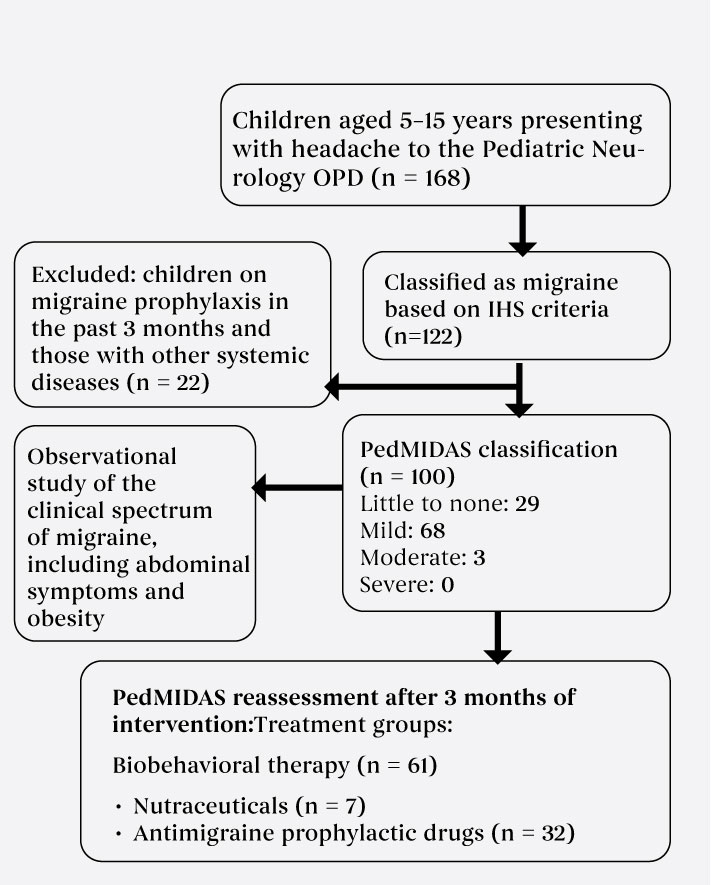 |
Figure 1: Flowchart of study design and patient selection. |
After three months, 98% of children had mild or no migraine-related disability. Statistical analysis showed a significant reduction in migraine frequency across all treatment groups, with the biobehavioral therapy group showing significant improvement (p = 0.016) and all other groups showing highly significant reductions (p < 0.0001).
Discussion
Our study provides valuable insights into childhood migraine, revealing distinct patterns in age distribution, gender prevalence, and headache characteristics. Among the children studied, 66% were between 5 and 10 years old, while 34% were in the 10 to 15-year-old group. Boys (59%) showed a higher prevalence compared to girls (41%), aligning with the American Migraine Prevalence and Prevention (AMPP) study, which reported that migraine is more common in boys before puberty but more frequent in girls during adolescence.7 Stewart and colleagues found that migraine with aura was most common in boys at age 5 and girls at age 12, whereas migraine without aura peaked at ages 10 in boys and 14 in girls.8.
Regarding headache characteristics, 68% of children experienced bilateral headaches, predominantly bifrontal, while 31% had unilateral headaches, a pattern typically seen in adults.
A strong hereditary link was observed, with 80% of children having a family history of migraine spanning two to three generations. Moreover, 17% experienced preceding aura, most commonly visual in nature (52.63%), including scotomas and gray halos; one child illustrated the aura on paper. Other aura symptoms included vestibular sensations such as rotational movement or a feeling of levitation, and sensory disturbances, such as ‘ant-crawling’ sensations on the hands. Al-Futaisi et al. reported aura in about one-third of migraine patients, usually manifesting as visual illusions known as fortification spectra, while 31% experienced numbness or tingling of the face or arms.9
In our study, 92% of children with migraines experienced photophobia, while phonophobia was reported in only 50%. This observation aligns with previous findings that photophobia is common in pediatric migraine, whereas phonophobia is less frequent.10
Gastrointestinal manifestations were also common, with nausea and vomiting being the most frequent symptoms, while 18.18% of children experienced abdominal pain, and 24.49% had constipation. Notably, seven of the 18 children with abdominal pain had a history of infantile colic. Additionally, allergic rhinitis was present in 30% of children, contributing to poor sleep due to mouth breathing and thereby increasing headache susceptibility.
Dietary triggers frequently played a significant role, with chocolate, citrus fruits, nuts, ice cream, alcoholic beverages, coffee, and caffeine being the common migraine triggers.11 Other compounds such as monosodium glutamate (MSG), histamine, sucralose, and gluten were also identified as potential triggers.12 In this study, food-related triggers were identified in 33.96% of children, particularly cocoa-containing products (51.9%), fast food (30.71%), and aginomoto ( 6.3%), which were the most common triggers.
Sleep deprivation was another major factor (18.8%), while increased screen time, with a median of four hours per day, was reported as a trigger in 20.1% of cases. Stress was a contributing factor in 18.8% of children. Changes in weather and travel, particularly long school bus rides, affected some children, with seven reporting worsening symptoms following sun exposure.
The median migraine severity, assessed using the visual analog scale, was5.6, confirming that pediatric migraines occur less frequently, are shorter in duration, are less severe, and are easier to manage than adult migraines. The most common relieving factors reported were sleep (83%), vomiting (58%), and analgesic use (38%).
Catamenial migraine has been reported to affect 35% to 54% of females.13 In our study, catamenial migraine was reported in five girls (5/12). General examination findings were normal in 68% of the children. A study by Kjnik ST examined the impact of obesity on migraine severity in children and reported an obesity rate of 17% among children with migraine.14 In comparison, our study found a slightly higher prevalence of overweight/obese children (22%).
Based on PedMIDAS scores, 68% of children had mild disability (score 11–30), while 29% had little or no disability (score 0–10). Only 3% had moderate disability (score 31–50), and no children had severe disability.
Management relied predominantly on biobehavioral therapy, which resulted in improvement in 61% of children. Nutraceutical supplementation with magnesium was used in 7% of cases. Prophylactic medications were prescribed to 32% of children, including flunarizine (13 children), amitriptyline (10 children), and beta-blockers (nine children).
Lifestyle modifications, particularly restricting cocoa-containing foods, significantly reduced migraine frequency, highlighting diet as a potential disease-modifying factor. After three months of treatment, 98 children transitioned to the ‘little or no disability’ category on the PedMIDAS scale, with only two children showing minimal improvement — one in the behavioral therapy group and one in the flunarizine group. Large clinical trials such as the CHAMP study have demonstrated that biobehavioral therapy and lifestyle modifications significantly reduce migraine frequency, with similar improvements observed among children receiving amitriptyline, topiramate, or placebo.
Additionally, an Indian study by Keerthana et al. reported comparable migraine disability scores between propranolol and placebo groups.15 A limitation of our study was the use of the PedMIDAS scores to assess migraine disability, which is subject to recall bias and subjective interpretation, particularly in children who may have difficulty accurately reporting symptoms over time.
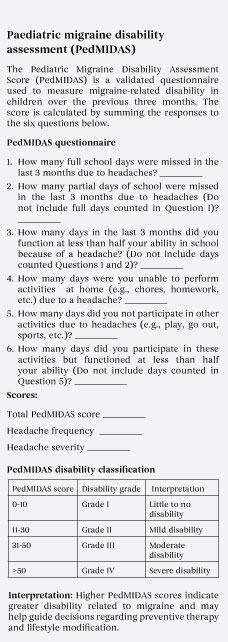 |
Figure 2: Visual Analog Scale (VAS) used for assessment of headache severity. |
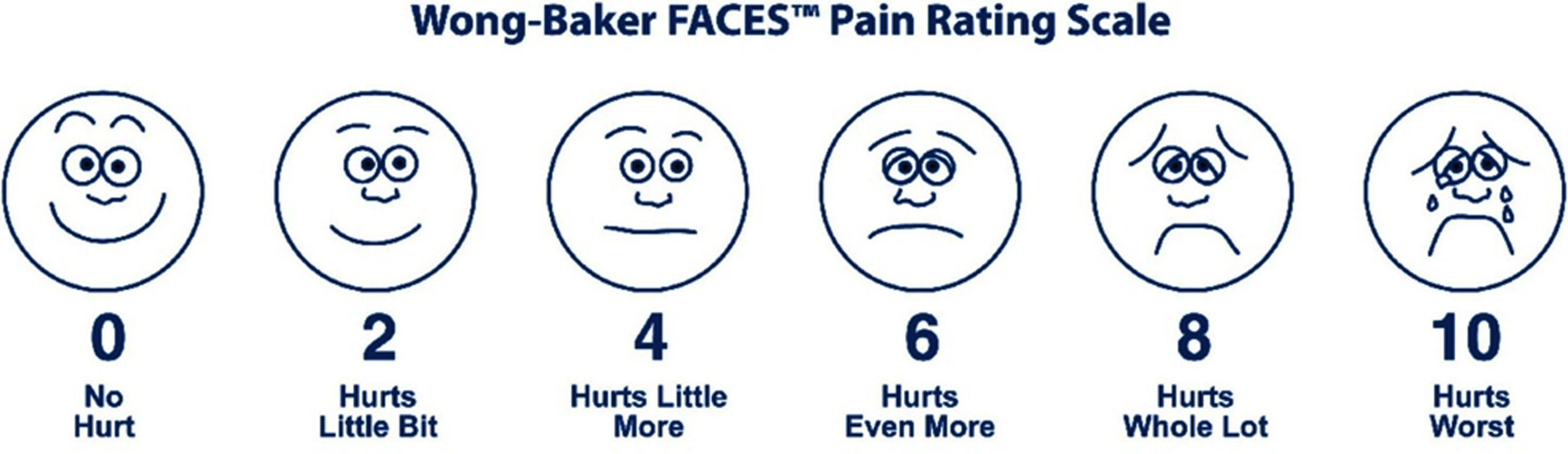 |
Figure 3: For younger children who may have difficulty interpreting numerical pain scales, the Wong–Baker FACES Pain Rating Scale was used. This scale uses a series of facial expressions corresponding to increasing levels of pain intensity. Children were asked to select the face that best represented their pain level. |
Conclusion
The clinical profile of 100 children with migraine was analyzed in this study. The most common triggers identified were cocoa-containing foods (51.9%) and fast foods (30.7%). Lifestyle factors such as stress, poor sleep hygiene, and increased screen time also played an important role in triggering migraine attacks. A notable proportion of children (22%) were found to be overweight or obese. Lifestyle modification and trigger avoidance resulted in improvement in 61% of children.
- National Institutes of Health. Magnesium: Fact sheet for health professionals. Bethesda (MD): National Institutes of Health; [cited 2018 Aug 5]. Available from: https://ods.od.nih.gov/factsheets/Magnesium-HealthProfessional/
- Mauskop A, Altura BT. Intravenous magnesium sulphate relieves migraine attacks in patients with low serum ionized magnesium levels: a pilot study. Clin Sci (Lond). 1995;89(6):633–6
- Kohandel Gargari O, Aghajanian S, Togha M, Mohammadifard F, Abyaneh R, Mobader Sani S, et al. Preventive medications in pediatric migraine: a network meta-analysis. JAMA Netw Open. 2024;7(10):e2438666. doi:10.1001/jamanetworkopen.2024.38666
- Kliegman RM, St Geme JW, Blum NJ, Shah SS, Tasker RC, Wilson KM, et al. Migraine. In: Nelson Textbook of Pediatrics. 21st ed. Philadelphia: Elsevier; 2020. p. 3128–3138
- Hershey AD, Powers SW, Vockell AL, LeCates SL, Segers A, Kabbouche MA. Development of a patient-based grading scale for PedMIDAS. Cephalalgia. 2004;24(10):844–849
- Ranjan P, Singh N. Evaluation of clinical profile of migraine in pediatric patients. Int J Med Res Prof. 2020;6(1):44–6. doi:10.21276/ijmrp.2020.6.1.01
- Hershey AD, Powers SW, Coffey CS, Eklund DD, Chamberlin LA, Korbee LL, et al.; CHAMP Study Group. Childhood and adolescent migraine prevention (CHAMP) study: a double-blind, placebo-controlled, comparative effectiveness study of amitriptyline, topiramate, and placebo in the prevention of childhood and adolescent migraine. Headache. 2013;53(5):799–816
- Stewart WF, Simon D, Shechter A, Lipton RB. Population variation in migraine prevalence: a meta-analysis. J Clin Epidemiol. 1995;48(2):269–80
- Al-Futaisi A. Pediatric migraines: a comprehensive review and perspectives on diagnosis and treatment. Oman Med J. 2023;38(3):e499. doi:10.5001/omj.2023.45
- Koseoglu E, Talaslioglu A, Gonul AS, Kula M. The effects of magnesium prophylaxis in migraine without aura. Magnes Res. 2008;21(2):101–108
- Millichap JG, Yee MM. The diet factor in pediatric and adolescent migraine. Pediatr Neurol. 2003;28(1):9–15
- Gazerani P. Migraine and diet. Nutrients. 2020;12(6):1658. doi:10.3390/nu12061658
- De Matteis E, Ornello R, Sacco S. Menstrually associated migraine. In: Handbook of Clinical Neurology. Vol. 199. Amsterdam: Elsevier; 2024. p. 331–351
- Kinik ST, Alehan F, Erol I, Kanra AR. Obesity and paediatric migraine. Cephalalgia. 2010;30(1):105–9
- Keerthana D, Mishra D, Chauhan MK, Juneja M. Effect of propranolol prophylaxis on headache frequency in children with migraine without aura: a randomized, double-blind, placebo-controlled trial. Indian J Pediatr. 2023;90(9):880–885